
 Modern Chinese Automotive Review
Summary of Domestic Internet Criticisms Regarding the BYD Logo (“3YC”)
The BYD logo (“BYD,” often jokingly referred to as “3YC” online) has faced long-standing criticism on China’s internet, mainly focusing on the following aspects:
1. Inappropriate Associations and Homophonic Slang Issues
- Negative Connotations in Chinese Pronunciation: The letters “BYD” sound very similar to certain vulgar expressions in Chinese, leading to widespread online mockery as “3YC.” Many consumers have commented: “Every time I see this car logo, I can’t help but think of that word—it’s really embarrassing.”
- Brand Name vs. Intended Meaning: Although officially explained as “Build Your Dreams,” in Chinese contexts, users often focus more on the negative associations of its pronunciation, causing damage to brand image due to cultural differences.
2. Design and Visual Identity Issues
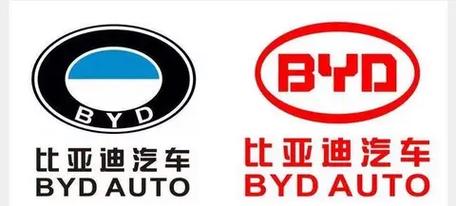
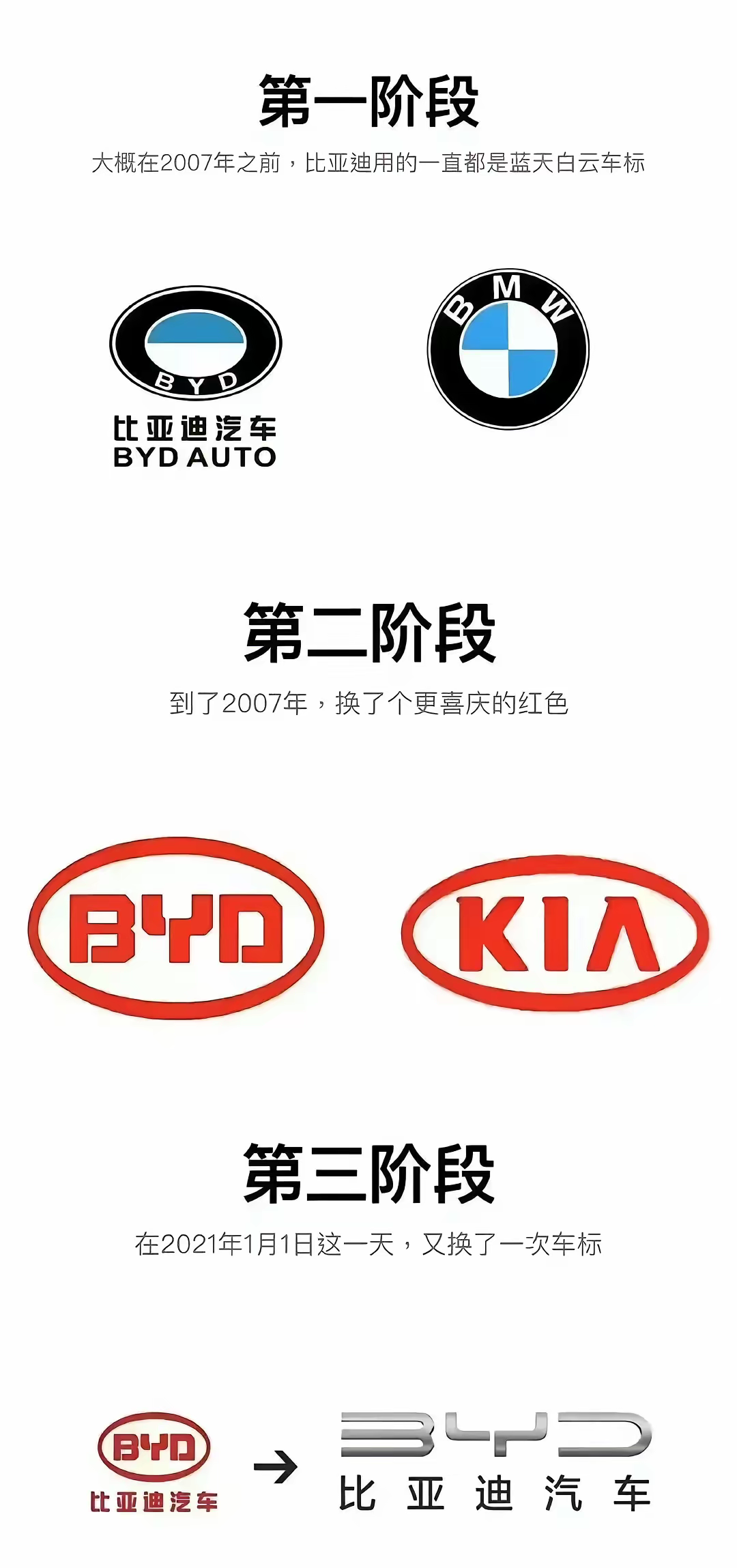
- Perceived Poor Design Quality: The older red oval logo was criticized as “looking like a sticker” or “reminiscent of township enterprises,” lacking sophistication. Some consumers remarked: “That red oval logo really does feel like something from a rural workshop.”
- Similarity to Competitor Logos: The BYD logo was previously criticized for resembling BMW’s “BMW” and Kia’s “KIA.” In 2006, it was even accused of imitating BMW’s logo, merely swapping “BMW” for “BYD.”
- Lack of Visual Prestige: Compared to luxury brand logos like Mercedes’ star, Audi’s four rings, or BMW’s blue-and-white, the simple lettering of “BYD” is seen as less prestigious.
3. Brand Positioning and Market Perception Mismatch
- Contradiction Between Economy Image and Premium Products: Initially positioned as an economy brand (“100,000–200,000 RMB range”), BYD’s logo struggles to align with newer high-end models like the Han and Tang, priced over 300,000 RMB.
- Lack of Trust in Premium Markets: In the 400,000+ RMB segment, consumers seek identity and emotional value from brands. A logo associated with lower-priced models fails to support the premium pricing and user expectations.
- Perceived Lack of Cultural Confidence: Compared to the culturally rich Chinese-character logos used in BYD’s Dynasty series (e.g., 秦, 汉, 唐), the “BYD” logo is viewed as lacking cultural depth.
4. Online Rumors and Malicious Attacks
- Black PR and Smear Campaigns: In recent years, numerous自媒体 accounts, such as “Wang Wukong Talks Cars” and “Brother Long Talks EVs,” have consistently spread false and derogatory claims about BYD, amplifying logo-related issues.
- Frequent Legal Actions: BYD has sued multiple自媒体 accounts for defamation and won. For example, in November 2025, a court ordered “Wang Wukong” to publicly apologize in People’s Court Daily and pay 313,800 RMB in compensation.
- Government Crackdown on Online Misinformation: In 2025, six government departments, including the Ministry of Industry and Information Technology, launched a joint campaign to regulate malicious attacks and false information targeting automotive brands.
5. Brand Response and Recent Developments
- Logo Evolution: Starting in 2015, BYD began using Chinese-character logos (e.g., 秦, 唐, 宋). In 2021, it introduced a new “BYD” logo without the oval frame. On January 1, 2025, it launched a metallic logo with geometrically transformed “BYD” letters, featuring open-ended lines resembling electrical contacts.
- Public Response to New Logo: The 2025 metallic logo has received positive feedback, with some consumers stating: “The new BYD logo looks much better—it no longer carries that ‘vulgar’ feeling. The letter design is more elegant and harmonious.”
- Multi-Brand Strategy: BYD has adopted a dual-track branding approach: internationalizing the main “BYD” logo while using culturally rooted Chinese-character logos for domestic sub-brands. The高端仰望 brand uses an oracle script character for “electricity,” and the海洋 series incorporates dynamic water elements, creating a multi-layered visual identity system.
It is worth noting that, with BYD’s growing technical capabilities and market position, along with the 2025 metallic logo update, some negative perceptions are gradually shifting. As one netizen put it: “I used to think ‘BYD’ sounded vulgar, but now I see it as an abbreviation for ‘Build Your Dreams’—suddenly it feels sophisticated!” However, changing long-held perceptions will require time, and brand image transformation remains an ongoing process.